
White-hat backlink acquisition means earning citations because your content, data, or expertise deserves them - through digital PR, linkable assets, and relationships - rather than buying or manufacturing them. In 2026 it matters twice over: backlinks remain a core Google ranking signal, and the brand mentions that come with real links are what teach AI engines to trust and cite you.
Links are where most SEO budgets get wasted or weaponized against their owners. Here's what works, what's changed, and what to refuse to pay for.
What Changed in 2026
Three shifts reshape backlink strategy: Google's spam systems now neutralize (rather than just penalize) most paid and PBN links - money spent on them simply evaporates; link relevance outweighs raw domain authority (evaluate prospective linking domains with our live domain authority checker) - one link from a respected industry site beats ten generic "DA 50" placements; and mentions now feed two systems, because LLMs learn brand credibility from the same trusted sources. Every real link is now a GEO asset too (see our GEO guide).
The 11 Strategies
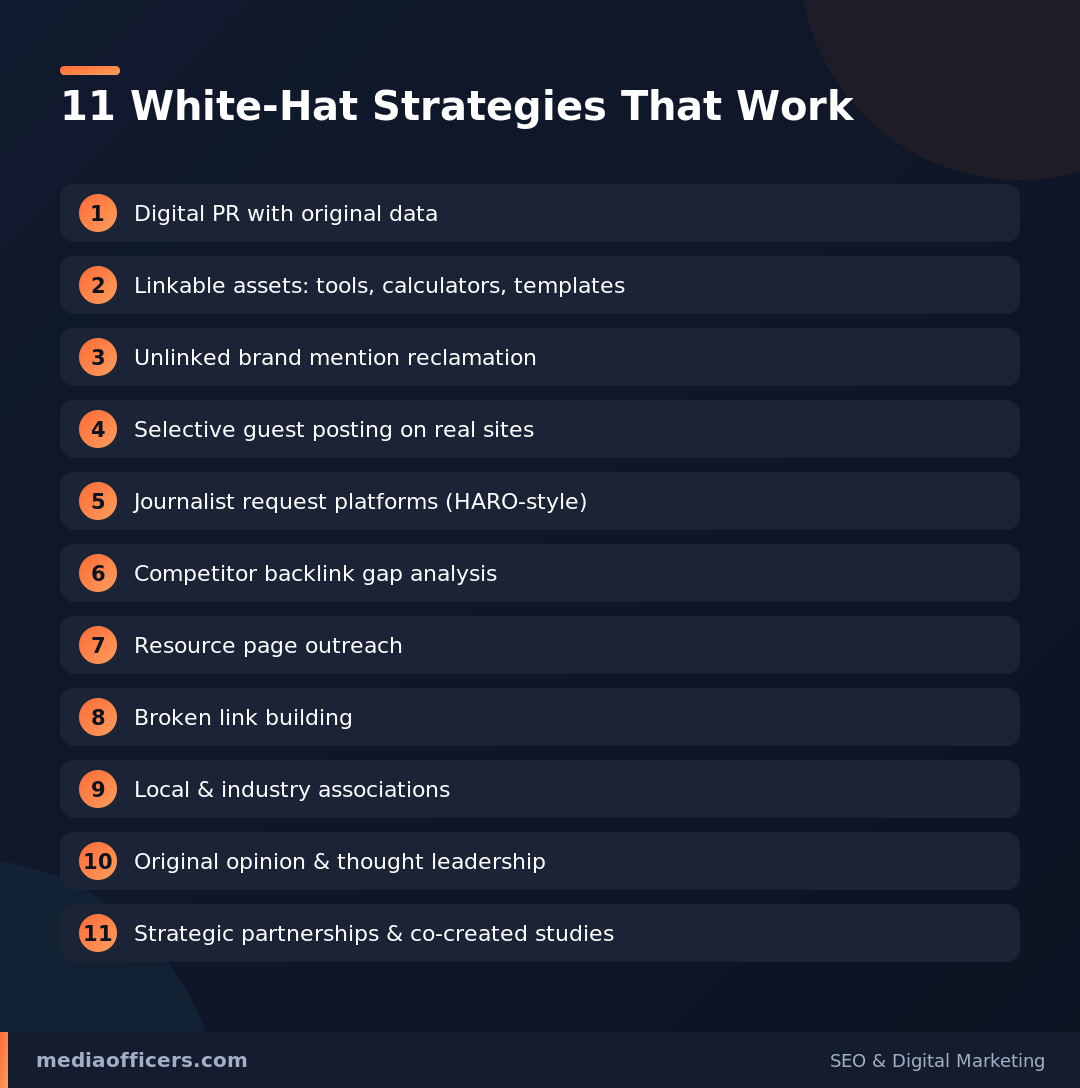 backlink acquisition strategies infographic">
1. Digital PR with data
Publish original data - surveys, analyses of your own client metrics, industry benchmarks - and pitch the findings to journalists and industry publications. Highest effort, highest payoff: one strong data story can earn dozens of editorial links.
2. Shareable assets
Free tools, calculators, templates, and definitive guides attract passive links for years. A mortgage EMI calculator, an SEO audit checklist, a fitment guide - assets people reference naturally.
3. Unlinked brand mentions
Search for existing mentions of your brand, founders, or studies (Google alerts + mention tools), and politely request the link. Highest conversion rate of any tactic because the endorsement already exists.
4. Guest posting - done selectively
Still works when the site is genuinely relevant, editorially selective, and has real traffic. Dead when it's a "write for us" farm publishing anyone. One rule: would you want the referral traffic even with no SEO value? If no, skip.
5. HARO/journalist-request platforms
Answer journalist queries with genuinely expert, quotable input. Named-expert quotes in publications build links and the author-entity signals AI engines weigh.
6. Competitor backlink gap analysis
Pull competitors' link profiles (see the tools we use), find sites linking to two or more competitors but not you, and give those sites a reason to add you - usually better content on the same topic.
7. Resource page outreach
"Best resources for X" pages exist to link out. If you have a legitimately strong guide or tool, inclusion requests convert well.
8. Broken backlink acquisition
Find dead links on relevant sites, offer your working equivalent as the replacement. Lower volume than it used to be, but conversion is high because you're solving the site owner's problem.
9. Local and industry associations
Chambers of commerce, trade bodies, supplier directories, event sponsorships, "where to buy" manufacturer pages. Unglamorous, highly trusted, and especially powerful for local SEO.
10. Original opinion and thought leadership
Contrarian, well-argued takes from named experts get referenced in roundups and newsletters. This is also the content LLMs quote most readily.
11. Strategic partnerships
Co-created studies, webinars, and integrations with complementary (non-competing) businesses - each partner's audience and site links to the shared asset.
What to Never Buy
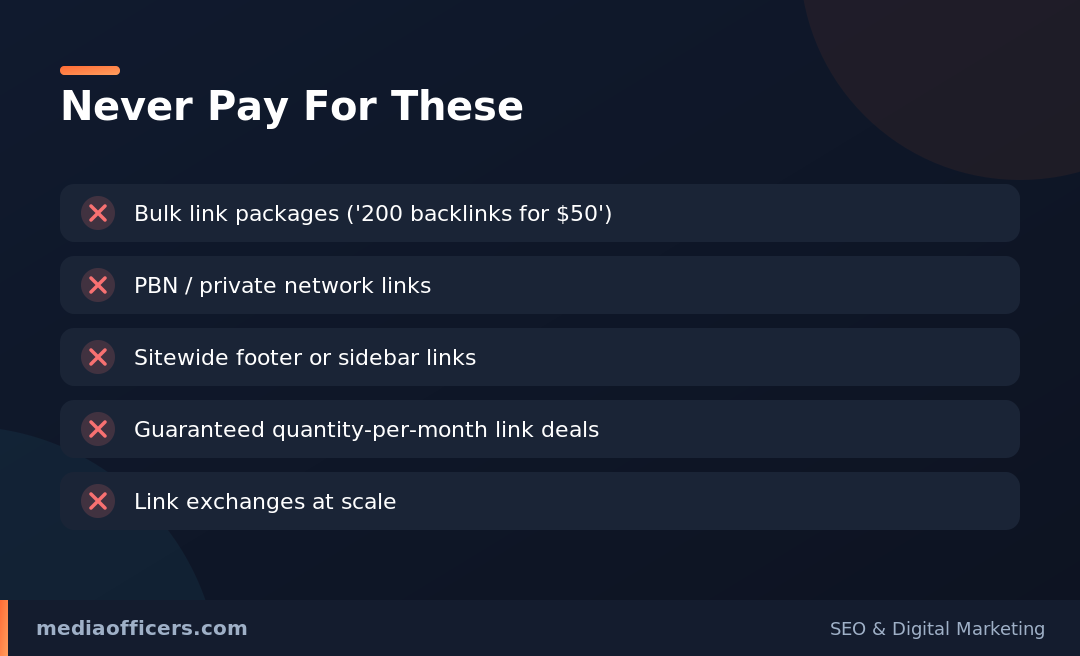
- Bulk link packages ("200 backlinks for $50") - directory spam and comment links
- PBN links - networks get deindexed and take your rankings with them
- Sitewide footer/sidebar links
- Any link with guaranteed quantity-per-month pricing
- Link exchanges at scale
If a provider can't tell you which sites and why the site would link to you, the answer is spam. This is also the single biggest corner cheap SEO packages cut - worth reading before you sign anything: how to choose an SEO company.
How Many Links Do You Need?
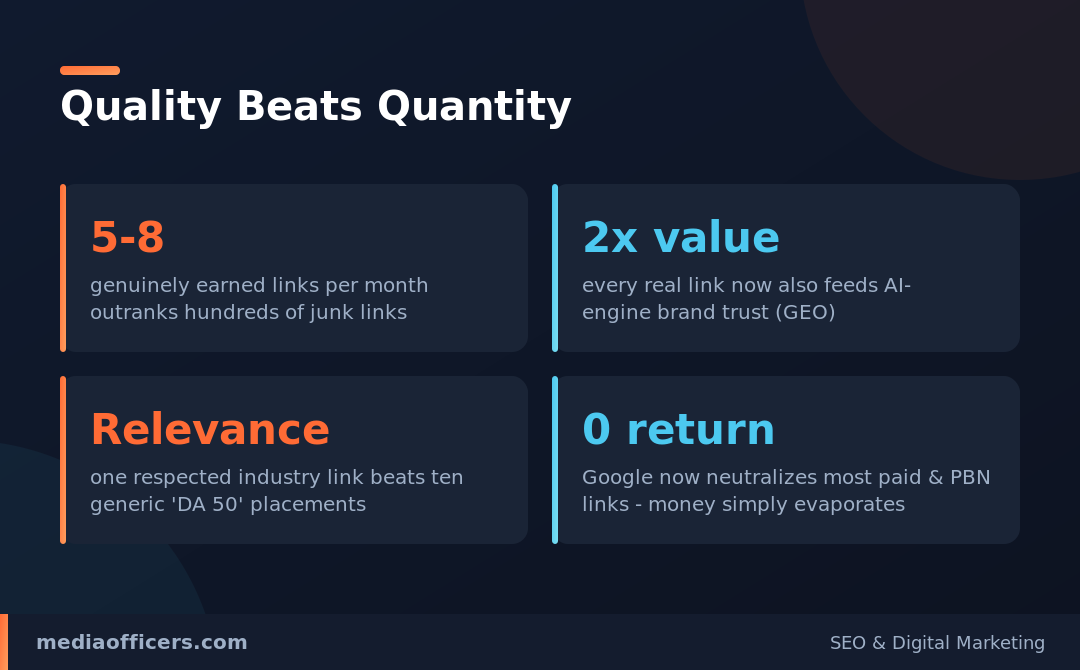
Fewer than you think, better than you have. For most SMB campaigns we build 5 - 8 genuinely earned links per month and outrank competitors holding hundreds of junk links. Judge by: relevance of the linking page, real traffic on the linking site, editorial placement, and anchor-text naturalness - never by raw count.
FAQs
Are backlinks still important in 2026? Yes - links remain among Google's strongest ranking signals, and the brand mentions accompanying real links now also drive AI-search citations. What died is link manufacturing, not link earning.
How many backlinks per month is safe? There's no unsafe number of earned links. The safer question is quality: 5 relevant editorial links beat 500 directory links. Sudden spikes of low-quality links are what trigger spam systems.
Do nofollow links help SEO? Directly, minimally - Google treats nofollow as a hint. Indirectly, yes: they drive traffic, build brand mentions, and often precede followed links from other sites that discover you.
What's the fastest way to get quality backlinks? Unlinked mention reclamation (the endorsement already exists), then journalist-request platforms. Both can land links within weeks, while data-driven digital PR builds the bigger wins over months.
Should I disavow bad backlinks? Rarely. Google ignores most spam links automatically. Disavow only with a manual action or a clearly toxic profile from past black-hat work.
Backbacklink acquisition is 60% of what separates our campaigns from cheap packages. See how we do it: SEO services.

Written by
Rudhrah KeshavCo-Founder & Chief Revenue Officer (CRO)
Rudhrah Keshav is the Co-Founder & CRO at MediaOfficers. 16+ years SEO architect, published author of "AI Marketing for Indian Businesses" and "Local SEO" (Google Books / Amazon), featured in Yahoo Finance.


